Our Blog: March 24, 2026
- 855.471.2589
- Schedule a Tour
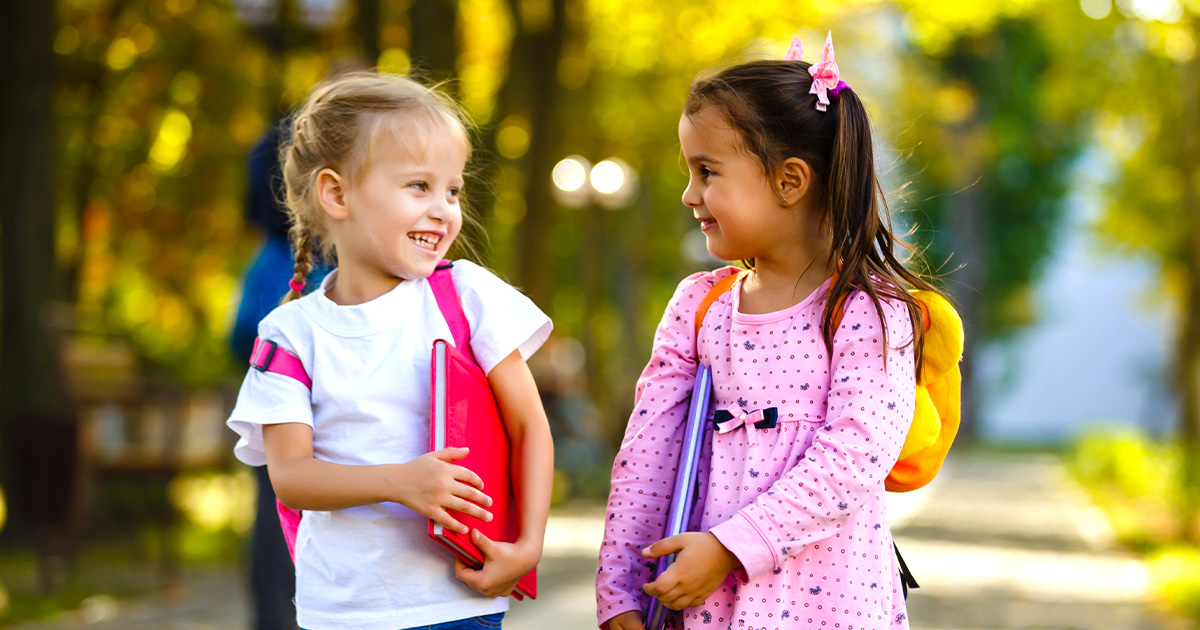
As kindergarten approaches, many families ask the same question: “Is my child ready?” It’s a thoughtful question, and one with a bigger answer than most generic checklists can provide.
Kindergarten readiness is not only about recognizing letters or counting to 20. Research continues to show that readiness includes the whole child: social confidence, emotional regulation, independence, communication, and curiosity. When children feel capable and secure in a learning environment, academic skills follow more naturally.
The National Association for the Education of Young Children (NAEYC) reminds us that readiness is a combination of physical, social, emotional, language, and cognitive development, not just academics. School readiness aligns with the Montessori Method, as kindergarten is often the next step after the 3-year cycle in the Montessori classroom.
Identifying readiness beyond academics
New brain research helps us define readiness beyond academics. “It means that a child has a willing attitude and confidence in the process of learning: a healthy state of mind.” While each child has distinct outward strengths and skills that we encourage and celebrate, it’s important to also support the development of their mind to ensure they also embody a readiness to learn.
Dr. Montessori’s early childhood vision took into consideration the whole child and their development, a vision you’ll see brought to vivid life when you tour one of our Montessori schools. In Montessori terms, this critical time of growth is referred to as the Sensitive Period. It includes clearly identifying and preparing specific materials to help a child gain independence, a sense of control over learning, and the development of concern for quality, order, and accuracy.
This phase provides a valuable opportunity for guiding overall readiness as evaluated through a Montessori lens. During this time, “children learn skills related to the sensitive period with ease. They don't tire of that work, but seek it, crave it, and need it.”
Support a strong home-family connection
A strong home-family connection is important in setting the stage for school readiness. This relationship encourages positive communication to help children see themselves as capable and able to learn and grow. As in our Montessori Unlimited classrooms, families can help support the development of readiness skills at home. The NAEYC provides these tips:
- Help them develop independence at home. Encourage your child to dress themselves, take their coat on and off and hang it up, use the bathroom without assistance, wash their hands without constant reminders, and put on their shoes. During meals, provide serving spoons so your child can help themselves at the table and clear their dishes
- Teach responsibility. If you haven’t already, start transferring small responsibilities to your child. After a family trip to the pool, you might put your child in charge of emptying the backpack, refilling water bottles, or hanging wet swimsuits. Even when it may be easier for you to complete these tasks, let them take on the responsibility.
- Develop and follow routines. Set up morning routines that will transfer into a school setting. Getting up around the same time every day, getting dressed, and having an early breakfast together is a great way to transition to school.
- Engage in meaningful literacy activities. Encourage your child to help you with thank you cards, shopping lists, or notes. They may start with scribbles or pictures, move into scattered letters, and finally, some recognizable words as they enter school. Appreciate their attempts and watch their skills develop with practice.
- Acknowledge their feelings. Take your cues from your child. They may express being nervous, not wanting to go, or feeling excited to start school. Whatever their thoughts, take the time to appreciate where they are and tailor your conversations accordingly.
Montessori environments are intentionally designed to help children develop these skills, while fostering a joyful curiosity about the world. By choosing a Montessori beginning, you embrace an approach that supports your child as a whole person, and by choosing one of our Montessori Unlimited classrooms, you will gain a partner to prepare your child for kindergarten and beyond.
Additional resources for families:
- Readiness: Not a State of Knowledge, but a State of Mind (NAEYC)
- Sensitive Periods from Birth to Age 6 – A Chart and a Guide (The Kavanaugh Report)
- Ready or Not Kindergarten, Here We Come! (NAEYC)